Thursday, September 3, 2015

Kids4Wolves on Instagram

The main branch of Kids4Wolves is on Instagram; there, we post facts, photos, videos, ways to help, and updates on wolves around the country almost every day. We are up to over 12,000 followers as of September 2015! Please follow us to learn about wolves and to get involved!
www.instagram.com/kids4wolves

Friday, November 21, 2014

Gray Wolf at the Grand Canyon - Naming Contest!

UPDATE FEBRUARY 11, 2015  -  10-year-old Zachary Tanner from Oregon won the naming contest with the beautiful name "Echo." Zachary thought of the name Echo "because she came back to the Grand Canyon like an Echo does." 
    Unfortunately, on December 28, 2014, Echo was shot and killed in southern Utah - apparently mistaken for a coyote by a hunter. Her incredible journey south from the Northern Rocky Mountain gray wolf population ended tragically.
  

 **Naming Contest Now CLOSED**
  Recently, a large, collared canine was spotted in the North Rim of the Grand Canyon in Arizona; DNA results just came in confirming that the lone animal is a wild gray wolf!

 
     This wolf is the first to roam the Grand Canyon  area since the 1940's!

   Conservationists are now holding a naming contest for the incredible Grand Canyon wolf, just for kids! You must be younger than 18 to enter: http://www.mexicanwolves.org/index.php/news/1340/51/Enter-Now-Grand-Canyon-Wolf-Naming-Contest 


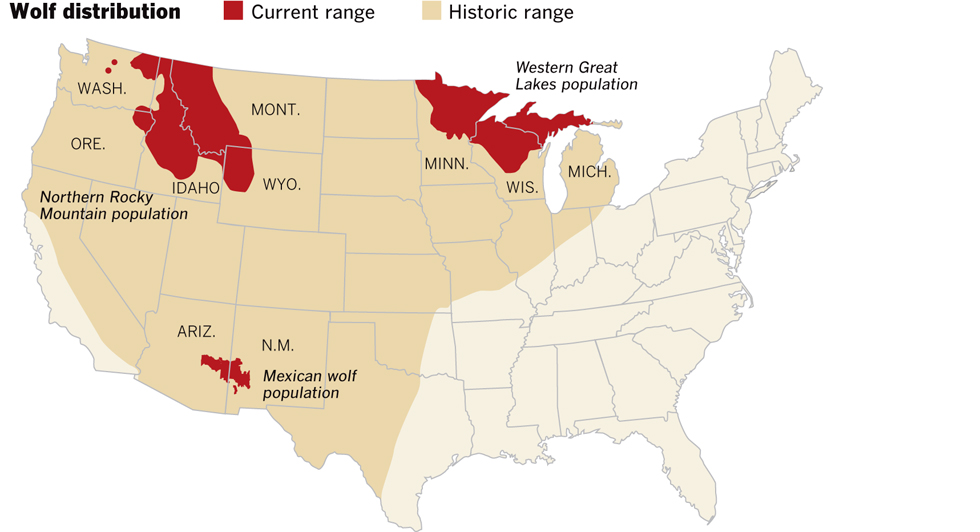
     The female wolf had to travel 450 miles from either Idaho, Montana, or Wyoming to reach the Grand Canyon. Check out the map below to see how far south she had to travel to reach northern Arizona (the occupied wolf range in southern Arizona is a small population of Mexican gray wolves; the Grand Canyon wolf was a gray wolf):
   

     This female wolf traveled an amazing distance to find a mate and start a family, just like Oregon's famous wandering wolf OR-7, affectionately named "Journey" by the public.

          Let's help give this astounding wandering wolf a name!

Thursday, August 21, 2014

Montana "Wolf Stamp"

**Public Comment Period Now CLOSED**
Montana is considering having a "Wolf Management Stamp." http://fwp.mt.gov/news/publicNotices/armRules/pn_0177.html
        This stamp would "be issued to any persons who wish to donate to the department's management of wolves." Any resident or nonresident would be able to purchase one or more stamps for a donation of $20.00 each.
         Most of the Department of Fish, Wildlife, and Parks budget comes from the sale of hunting, trapping, and fishing licenses and tags. This perhaps gives 'consumptive' (hunters, fishermen, trappers) a more skewed influence on the Department and what it can do with those funds, especially when it comes to wolf management. The proposed Wolf Management Stamp provide an additional funding source for wolf conservation and management in Montana. The stamp would give non-consumptive users (wildlife and bird watchers, etc.) the opportunity to contribute to wolf and wildlife management.
        Montana wants to know if you think this stamp is a good idea or if you think there should be any changes. It's important for both residents and nonresidents of Montana to comment, as both will be able to use the stamp.

Please submit your comment here: http://fwp.mt.gov/news/publicNotices/armRules/pn_0177.html
Comments are due Friday, August 22, 2014!

Here's a sample comment for a nonresident:

I live in _________ and visit Montana several times a year/plan to visit Montana in the future; one of the main reasons I go to Montana/plan to visit Montana is to enjoy Montana's rich array of wildlife, especially wolves, in a non-consumptive manner. I believe that the proposed Wolf Conservation Stamp is a good idea, and I know I would buy them to support Montana Fish, Wildlife and Parks and their efforts to coexist with wolves using methods other than lethal management. 
I would suggest a few changes; in the proposed rule, change the stamp from "wolf management stamp " to "wolf conservation stamp". Make sure that "non-lethal" is specified. These stamps should go exclusively to non-lethal wolf management, as FWP already gets its lethal management funds from consumptive users. Especially, I would like to see money go toward non-lethal proactive measures to prevent wolf/livestock conflict. I approve of the proposal's inclusion of money going towards the purchase and maintenance of wolf habitat; conducting research, education, and outreach; and hiring additional wardens to prevent poaching of wolves and other wildlife.
Thank you for this proposal that gives everyone a say in the management and conservation Montana's amazing wildlife that draws so many people from around the country.


Tuesday, June 24, 2014

Wood River Wolf Project - Idaho Workshop

       This past week I attended the Wood River Wolf Project's workshop in Idaho. The Wood River Wolf Project is an operation that has helped ranchers in the Sun Valley area of Idaho for almost 7 years. They work to help local ranchers protect their livestock from wolves.
                                     
      How does this help wolves? When wolves kill livestock like cows or sheep, the rancher can call Wildlife Services, a division of the Department of Agriculture who is charged with "resolving wildlife conflicts," to have the wolves killed. But the Wood River Wolf Project helps ranchers to prevent their livestock from being killed in the first place. The Wood River Wolf Project has worked with about 100,000 sheep over the last 7 years with less than 30 sheep lost to wolves over the entire period. Not a single wolf has been killed for depredation (preying on livestock) in the area. 
                                                    .         

          The WWWP uses creative tools like range riders, flagging fences, guard dogs, and night lights. At the workshop, we learned a lot about how to deploy these tools in the field so they work properly. We visited one of several ranches (Lava Lake Lamb) that has had great success keeping wolves and livestock apart. We met some sheep and guard dogs. The dogs serve to provide an extra presence with the sheep and to alert people when wolves are near.


       We also heard from a cattle rancher just outside of Yellowstone National Park . The main message we got from these ranchers was that is was more effective for them to prevent livestock loss in the first place than to wait until livestock has already been lost to wolves. Teaching the resident wolf packs to avoid livestock is better than killing wolves after-the-fact. In other words, proactive prevention works better for ranchers than reactive killing. 

        Non-lethal, predator-friendly ranching is better for ranchers and better for wildlife.

       The Wood River Wolf Project is saving wolves by increasing tolerance and protecting livestock. They have proven that wolves and livestock can coexist on the same landscape, and the project is a model for coexisting with wolves - and other predators - across the country and world. 
      

Friday, May 23, 2014

"Man-Eating Super Wolves"

Don't believe everything you see on TV.
 - especially when it's called "Man-Eating Super Wolves" (looking at you, Animal Planet). Facts can be, and have been, completely distorted for cheap entertainment. Most people see these horror shows and think that wolves really are man-eating beasts. It's really sad that such a popular channel is spreading lies and primal fear of wolves. Wolves need our protection, but who would want to protect something they fear? Wolves directly pay the price for this "entertainment."
        We're pretty upset about what Animal Planet showed about wolves for "Monster Week." They claimed that wolves are running out of prey and are starting to hunt and eat humans regularly (a flat-out lie). Here are the facts. In North America, 2 people have been killed by wolves in last 100 years. The loss of human life was tragic, but it is not a repeating pattern on the wolves' part. The wolf in Minnesota who bit the young camper had been fed by people at that campsite (it had been habituated to human presence). I have spent a lot of time close to wild wolves in many situations: when pups are near, when food is near, when they're  hungry, and never once have I felt remotely threatened. Wolves avoid humans. They DO NOT see us as food. All wild animals deserve our respect but wolves don't deserve our fear. In contrast, black bears have killed 63 people in the last 100 years, dogs kill 30 people EACH year, and cows kill 20 people EACH year (that's 1000 TIMES more people than wolves). Don't let @AnimalPlanet fool you. Wolves are not monsters. 
        Now, many people believe that wolves kill humans and you need to be afraid if wolves are near. How should people know any better with these wild distortions being broadcast on TV as fact? This is a huge setback for dispelling the myths surrounding wolves and gaining public acceptance for wolf recovery and presence on the landscape. 
        Animal Planet is selling flat-out lies about wolves and other wildlife just to gain viewership.

        Please contact them and share your outrage and concerns, and ask them never to air "Man Eating Super Wolves" again: 
http://corporate.discovery.com/contact/viewer-relations/
Or call their Ethics Hotline and leave a comment: 571-262-4899
Share your thoughts, but avoid using swear words and use good grammar. They'll take you seriously that way.

Monday, April 21, 2014

Wolf Watching in Yellowstone, April 2014

For spring break, I again headed to Yellowstone National Park in Wyoming to observe wolves in the wild. We saw a total of 11 wolves in three packs: 7 in the Junction Butte Pack, 2 in 755M's group, and 2 in the Lamar Canyon Pack. We were there for about 6 days, and every single day we saw hunting behavior from the wolves. Several times we saw young members of the Junction Butte Pack attempting to hunt some elk. One day, they faced off some elk on the edge of a rocky ledge, then chased one elk down some very treacherous and steep terrain. Then we saw the Lamar Canyon pair chase and test a small group of elk. Several more times we saw the Junction Butte wolves seriously chase some elk; but of all the wolves' kill attempts we witnessed on our trip, we didn't see a single successful hunt. Studies have shown that wolves are only successful about once or twice for every 10 times they attempt a kill. That means they fail 80%-90% of the time. Elk are by no means defenseless against wolves, and many times we saw the elk chasing the wolves. Wolves can be severely injured by their prey. Hunting is a life-or-death event for both predator and prey.
Here are some images from the trip:

These are the two members of the Lamar Canyon Pack, 925M and 926F. 926F is very pregnant, so 925M will have to provide for her and the pups all by himself. Perhaps at this moment he was showing her what he was capable of...but the elk would have none of that!

 889F and 755M. 889F used to be part of the Junction Butte Pack and 755M used to be the alpha male of the Lamar Canyon Pack before 06, his former mate, was shot. While we were there, this pair met up with two young males from the Junction Butte pack. At first, the two males chased 755M because they didn't know him, but eventually they all played together. Interesting inter-pack interaction.
 925M, aka "Big Gray," the current alpha male of the Lamar Canyon Pack.
 926F is the fearless alpha female of the Lamar Canyon Pack. She stopped to face this bull bison, who barely gave her a second glance. He's about 20 times bigger than her and so had nothing to worry about.
 Six of the seven members of the Junction Butte Pack.
 Coyotes on a bull elk carcass (not killed by wolves, but instead probably died of malnutrition)
 A yearling from the Junction Butte Pack spent quite a long time trying to get at this newborn bison calf, but the mother bison was experienced and the young wolf eventually gave up.
Young Junction Butte wolves frolicking while the alpha female was at the den, perhaps giving birth, and the alpha male attends to her.

Monday, March 17, 2014

Wolves and Livestock: Can They Coexist?

Know what's AWESOME? In the whole state of Washington in all of 2013, only one cow was killed by wolves. The Washington Department of Fish and Wildlife has been helping ranchers with awesome, creative ways to keep their livestock safe without having to kill a single wolf in any of Washington's thirteen wolf packs. Non-lethal methods are often very effective, and wolves and livestock CAN coexist. It does take a lot of effort and it's only fair that livestock owners get some help with nonlethal methods, whether from state or federal wildlife agencies or private organizations. Both are at work in Washington and with great results. Wolves usually view cattle and sheep as sort of alien, not as prey. Often, something happens that causes a wolf to associate livestock with food, such as the carcass of a cow or sheep that died of natural causes being left out in the open. The smell of rotting meat will attract wolves and they will scavenge on the carcass, which may cause them to associate living livestock with food. Only 20% of wolves cause problems with livestock, but those problems are highly publicized. The best way to keep livestock safe is to stop wolves from associating livestock with food in the first place, and there are lots of ways to go about this. Even if wolves do start preying on livestock, it's not too late to get them to stop. Here are some very neat and creative nonlethal deterrents and a handbook on how ranchers can use them: http://www.defenders.org/sites/default/files/publications/livestock_and_wolves.pdf

"Fladry" is a little on the wackier of the non-lethal methods, but it has proven very effective. Fladry is simply red flags along a string. For some reason, something about the fladry trips wolves up and they will not cross the line it makes. Wolves are very intelligent, so in case they do test the boundaries, there's also something called turbofladry, which is fladry with an electric current. So if the wolf tries to touch or step over or under the fladry, it will be met with an unpleasant experience and probably won't try again. Nobody really knows what it is about fladry that deters wolves, but it does. Don't believe it? See for yourself.
This calf in Washington state died of natural causes and this wolf scavenged on it before fladry was erected around the calf (the carcass couldn't be moved). The wolf visited for three days and nights but never once crossed the fladry (though he walked through the barbed wire fence with ease). Eventually he left the area and dispersed to Canada.

Some will argue that killing wolves is the better option to protect livestock, but this is not the case. Killing wolves after wolves kill livestock creates an endless cycle. Killing a wolf or wolf pack after it kills livestock only creates room for more wolves to move in and potentially kill livestock again, so then those wolves will be killed and more wolves will move in...and so on and so forth. Livestock will keep getting killed and the problem won't be solved. But if you teach the resident wolf pack not to harm livestock, then you won't lose livestock in the first place. 
Wolves and livestock can coexist.

If you've ever eaten a steak or worn wool, you're impacting wolves and other predators/wildlife. It doesn't have to be a negative impact, though; please check out http://www.predatorfriendly.org/ to support businesses practicing predator-friendly methods!