Sunday, January 30, 2022

Submit Your Comment for Wolves!

 Ready to submit your comment? Regulations.gov Comment Page

Background - Why Wolves Need Your Voice Now

Wolves in Montana, Wyoming, and Idaho are currently not listed as endangered species. Being on the Endangered Species List gives species certain protections under the federal government while the population recovers; since being taken off the list, wolf populations in these states are no longer protected by the federal government, and instead are managed by the state governments. 

This has left wolves vulnerable to political, rather than scientific, decisions of these states. 

  • Recently, Montana's state legislature decided to target wolves, passing bills liberalizing wolf hunting laws. The regulations now allow bounties for killing wolves; allow snaring and longer trapping seasons; allow baiting wolves with meat; allow one person to kill up to 20 wolves each; and allow night hunting on private lands with the use of "artificial lights, thermal imaging technology, or night vision scopes."
  • Idaho, in some areas, allows 11- and 12-month wolf hunting and trapping seasons, resulting in young pups also being killed. The state helps fund a bounty on wolves, and annually kills wolves via aerial gunning. In certain areas, they also allow night hunting; hunting wolves with dogs; using vehicles to chase wolves; snaring; and baiting with meat. 
  • In 85% of Wyoming, wolves can be killed year-round, day or night, by nearly any method, including being chased down on snowmobiles. In the remaining 15% of the state, the Wolf Trophy Game Management Area (WTGMA) bordering the Greater Yellowstone Ecosystem, only 11 breeding pairs of wolves remain - dangerously close to the state's commitment to maintain at least 10 breeding pairs. They know that falling below this number could land wolves back on the Endangered Species List. 

These are not sustainable or ethical hunting practices. 

The U.S. Fish and Wildlife Service is conducting a Status Review of wolves in the Northern Rockies in deciding whether to restore federal protections for the species under the Endangered Species Act, and they are taking comments on the measure.

Please take a few minutes to submit a comment asking the Secretary of the Interior Deb Haaland to emergency re-list wolves. 

Be polite and respectful and use your own words! Comments are only counted if they are original. Some talking points:

  • States have demonstrated that they cannot manage gray wolves responsibly. These laws are completely political, and not scientifically justified. State legislatures are now dictating wolf hunting regulations, going over the heads of the actual biologists. 
  • These new laws represent an inadequacy of regulatory mechanisms to sustainably conserve wolf populations in the Northern Rockies. Unregulated killing of wolves is what led to their extirpation decades ago. 
  • The wolf population in the Northern Rockies states is being overutilized for recreational purposes. 
  • An emergency relisting is necessary to prevent further overutilization and to make states revisit their wolf management policies to make them sustainable for the species.
  • If you have ever visited Yellowstone National Park to see wolves, or if you plan to, mention this and how your tourism dollars would be lost if wolves were no longer visible there, impacting local businesses. 20 Yellowstone wolves have already been killed outside the park this season. 

Thank you and please share!


More Resources

Wednesday, August 19, 2020

Glimpses of an Extraordinary Old Wolf

Trail camera photo of wolf 32 in 2019.

The former breeding male of the Teanaway Pack, wolf 32, passed away last month at an estimated 12 years old after leading an extraordinary life. He is eulogized in a video by Wolf Specialist Ben Maletzke. Wolf 32 has also been an important part of my life for the better part of a decade, since I began studying wild wolves as a teenager.

The Teanaway Pack was confirmed by the Washington Department of Fish and Wildlife in 2011. At the time, they were just the fourth wolf pack to reestablish in Washington since wolves were extirpated in the 1920s, and the first to recolonize the central Cascade Mountains.

I began tracking the Teanaway Pack in 2013. The first time I came across their tracks, one set was distinctly bigger than the others. Soon, photos from my trail camera allowed me to put a wolfy face to the paw prints. I was 15 years old at the time, and I gave him the nickname “Bigfoot,” though I would later learn that the WDFW assigned him the ID of 32M when they placed a tracking collar on him.

DNA analysis revealed that 32 was born to the Lookout Pack, which was confirmed in 2008 as the very first pack to recolonize Washington. In fact, he was likely part of the first litter of wolf pups to be born in the state in nearly a century. As a grown wolf, he and a female would venture south to form the Teanaway Pack.

I continued studying the Teanaway Pack over the years. I am always happy to find any wolf tracks, but finding 32’s massive, unique prints – with one toe that slightly splayed out from one of his front paws – was particularly special. My mom called them “plates,” and they were nearly as big. 

Wolf 32's tracks in spring mud. 

I never saw 32, and I heard the pack’s distant howls just once. However, I have no doubt that he knew when I had trekked through his territory. Without fail, he would spot my cameras. He would often smell the ground, scan the nearby trees, find the camera and give it a glare before moving on.

Cameras and tracking gave me just a glimpse into the lives of 32 and his family. From what I could tell, he was a devoted father and a benevolent leader.

The current breeding female, 72F, almost exclusively led the pack’s excursions, with 32 following behind her. He carried snacks and “toys” for miles to deliver to the pups and their mother. Between 2014 and 2019, he fathered at least 18 pups, 14 of which survived through December of the year they were born. That’s a pretty good record for a pack of wolves making their living hunting large ungulates while navigating roads and other natural and man-made dangers. Since the pack was discovered in 2011, they were involved in only a handful of confirmed depredations despite sharing the landscape with livestock.

Wolf 32 with one of his pups.


In October of 2014, 32’s mate, 38F, was illegally shot and killed. 32 continued to raise the pups with the one remaining adult in the pack. Three of those pups survived at least a full year, and WDFW placed GPS collars on two of them. Both young wolves, a male and a female, later embarked on epic dispersals.

When my cameras first photographed 32, he was already at least six years old. The average lifespan of a wild wolf is just 4 to 5 years. He remained a robust-looking wolf, but his age began to show over the years. Moving with his pack, he kept up their swift trot, but when traveling alone, he walked at a slow pace. His gentle, bear-like face became more grizzled. In 2017, he sported a limp while escorting his four pups past my camera. We can only guess how many injuries he sustained over his lifetime and how much pain he may have lived with in his later years. Life is incredibly tough for a wild wolf.

A mysterious black wolf appeared in the Teanaway territory last year. This was a surprise given that all of the Teanaway wolves were gray and the pack is very isolated from other wolf populations. 32 continued to travel with his family until around February of this year. Soon after, the black male wolf began traveling with the pack, and it seemed that 32 had been displaced.

It’s heartbreaking to imagine that 32 was alone for the last few months of his life. It is also extremely impressive that, at his age, he survived as a lone wolf until July when WDFW found his body. He apparently died of natural causes.

Wolf 32, or “Bigfoot,” was a remarkable wolf and a quiet neighbor. He was a true Washingtonian, from his first howls in the Methow Valley twelve years ago to his last in Kittitas County. With less than 200 wolves in all of Washington, this individual made an incredible contribution to wolf recovery, and his legacy will undoubtedly influence wolf recolonization throughout the Cascades for decades to come.

More personally, I am thankful that I was able to know him in some small way. I first crossed paths with him at 15 and now, as a 21-year-old pursuing a wildlife biology degree, I am so grateful that I had the opportunity to learn from him and his pack. Years of observation allowed me to discover my passion for tracking and to understand how wolves move across the land. 

I will miss knowing that he's out there, and seeing his enormous, unforgettable tracks in the dust and snow year after year. Though I never saw him with my own eyes, the old wolf left his mark on me, and the hills he roamed for a decade are a little less wild without him.  


                                            Wolf 72F followed by 32M and their grown pup.


Tuesday, November 12, 2019

What should you do if you encounter a wolf?

Recently, the Oregon Department of Fish and Wildlife published a video to educate folks about wolf encounters as the Oregon wolf population grows. It shows a video taken by an ODFW summer intern when she encountered a wolf while hiking alone. The video shows a wolf trotting toward the intern, unaware that she is standing there at the edge of the field. However, the wolf runs away when the intern says something to let it know she's there. 
(Turn on the volume and watch in full screen!)


From the intern who took the video:


      "I have worked around wild wolves for a few years now, and there are a few questions that I’m frequently asked: 
      Am I afraid of encountering wolves? 
      Is it safe for me to be alone in an area where wolves might be? 
      Do I carry a weapon to protect myself from a wolf attack?
      I’ve had jobs involving tracking and monitoring wolves for the last three summers, and since 2017 I’ve had 6 encounters with wolves where the animals were aware of my presence (and there have been at least two times wolves were nearby and I didn't know until later). Even though I was hiking alone during two of those encounters, the wolves turned and went the opposite direction every time.
      Luckily, I was able to film this particular encounter with a wolf in Oregon. Being somewhat familiar with wolf behavior, it was clear to me that this wolf was unaware of my presence as it loped toward me. However, I can understand how someone with less experience with wild wolves could feel threatened in this situation. It seems that every year, stories surface about wolves “surrounding” or approaching people, especially during hunting season when folks are dressed in camo and imitating animal calls. Several wolves have been shot in Washington, Oregon, and other states by folks who felt threatened by their presence or approach.
      Wolves are often portrayed as man-eaters, whether as the Big Bad Wolf devouring Little Red Riding Hood’s grandma or a pack of wolves pursuing Liam Neeson in The Grey. These scary representations of wolves lead many people to believe that wolves view people as prey.
      I am always vigilant when I’m in the woods, and I always carry bear spray because I never know what situation I might walk into with any species. Where there are wolves, there are also bears and cougars (and people). However, I don’t fear a predatory attack from a wild wolf. Except under extremely unusual circumstances, wolves are simply not out to get us, and often all it takes is a shouted “hello” to scare a wolf away.
      By definition, wild animals are never completely predictable. Sometimes wolves, instead of fleeing, might be curious or defensive (especially if there are dogs involved). I can’t say that wolves pose zero threat to people – but that goes for any wild animal. Living, hiking, hunting, or otherwise recreating in the wild means being prepared for and accepting a certain level of risk. However, having wolves on the landscape does not make it any more dangerous.


If you are out hunting or hiking and you see a wolf or wolves near you, don't assume that they are coming to attack you. Stand up, wave your arms, and shout to make sure that they know you're there.


If you feel threatened by a wolf, act aggressively (look big, shout, throw things) and calmly leave the area. Never run from a wild animal."

-  The Salem Statesman Journal area published a great article about the video and what to do during a wolf encounter: 
https://www.statesmanjournal.com/story/travel/outdoors/2019/10/31/oregon-wolf-populations-increasing-what-to-do/2501293001/?fbclid=IwAR1n7c_u7dgbLMVSCEKG1em3lY9rAnXpuKfcPUfWx9Dst_-F72uu9-wW-ys

-  This is a good video about hiking with dogs in wolf country:
 https://www.spokesman.com/blogs/outdoors/2017/jul/27/video-hiking-safely-dogs-wolf-country/

-  The Washington Department of Fish and Wildlife has some excellent information on how wolves behave and what to do if you encounter them:
https://wdfw.wa.gov/species-habitats/species/canis-lupus?fbclid=IwAR1_ZbulLj4mHN3xJskMdruuHks6XKJ1HHyCMMYdzeSwbI2aynYN5M3MrbM#living

-  This video from local news station Central Oregon Daily has more great Oregon wolf footage and advice from ODFW Wolf Coordinator Roblyn Brown:
https://centraloregondaily.com/wolf-encounter-odfw-intern-catches-incredible-video/?fbclid=IwAR23dSH2eHr1gfnqrSG5Gbq54OSbDm52mvP5lVwx-1HpCRRJByOeeYso6bc

-  Learn more about Oregon's wolves: https://dfw.state.or.us/wolves/

More on wolf encounters: 


Wolf pups are extremely curious and, for lack of a kinder term, a little dumb. They may be more likely to approach a person or vehicle out of curiosity. NEVER FEED WILDLIFE. If a pup approaches you, do the young wolf a favor and shout or throw things at it to make sure it stays afraid of people. This will keep the wolf safer in the long term. A wolf that loses its fear of people is more likely to be shot or hit by a car. 

In the handful of cases where wolves have attacked people, it often turns out that they had been fed or had been finding food in campgrounds or dumps. Wolves that appear to have lost their fear of people are considered habituated and are often killed by wildlife managers for public safety. Keep wildlife wild.


Saturday, June 17, 2017

Wolves and Prey

Wolves have a reputation for killing needlessly or for fun, but in reality wolves work hard and rarely succeed when hunting large prey like elk, moose, bison, and deer. In Yellowstone National Park, wolves only successfully make a kill in about 1 of every 5 hunting attempts! 
Elk are large, smart animals, and they've evolved alongside wolves for thousands of years. It's extremely difficult for wolves to take down healthy adult elk. Wolves can be injured or killed by a kick from an elk. For this reason, wolves tend to target very young, old, or unhealthy elk. Even so, it takes a huge amount of energy for wolves to chase and (if they can) take down prey.

Friday, August 26, 2016

Working With The Wood River Wolf Project

I spent most of August around the West learning about wolves, wolf recovery, and livestock.
A big highlight was volunteering for the Wood River Wolf Project, which is based in the middle of wolf and sheep country in Idaho. The project, with Lava Lake Lamb, works collaboratively with livestock producers in the community to prevent depredations (killing of livestock) by wolves and other predators. They work with ranchers to implement proactive, nonlethal deterrents including livestock guardian dogs, foxlights, starter pistols, and fladry. They have found that the comprehensive and correct use of these tools has led to a direct decrease in attacks on livestock by wolves - as well as other predators like bears, cougars, and coyotes.
Not only do these methods help ranchers, they also help wolves. When ranchers and their livestock can successfully share the landscape with wolves, it means that less wolves are killed through "lethal control actions" in response to wolf depredations on livestock. Proactively preventing depredations often works much better than reacting after attacks happen.
While volunteering with the Wood River Wolf Project, I helped to conduct howl surveys. Howl surveys involve playing a recorded wolf howl in the backcountry and listening for responses. Responses can determine where and how many wolves might be in a particular area. This helps herders and range riders know where it's safe to move sheep bands and when particular proactive tools should be used.
The Wood River Wolf Project and the livestock producers who put time and energy into living with wolves are a model for wolf/livestock coexistence across the country and world. It was a privilege to work with them and Lava Lake Lamb and to learn more about ranching in wolf country!
Help support other ranchers taking on predator coexistence here: http://www.predatorfriendly.org/
Specific breeds of Livestock Guardian Dogs help to discourage wolves from approaching livestock during certain times of the year.


Monday, May 2, 2016

Springtime for Wolves and Livestock

Springtime means a new generation of wolf pups, but it also means a new generation of sheep and cattle for the summer grazing season. This can lead to conflict between wolves and livestock, as wolf families work to feed their growing pups and young livestock are especially vulnerable. This time of year, it's especially important to use proactive tools like range riders, foxlights, fladry, and others to protect livestock from wolves. About 80% of wolves in a population don't cause problems for ranchers. But it's important to be proactive and make sure those wolves don't start associating livestock with food as they hunt wild prey for their pups.

Photo of Spruce at Wolf Haven International.


https://instagram.com/p/BE6bFKNmZxZ/

Friday, September 4, 2015

Meeting with the Washington Wolf Advisory Group

       Yesterday I had the opportunity to address Washington state's Wolf Advisory Group, or the WAG. The WAG is a group of stakeholders (hunters, ranchers, and conservationists) that provides different perspectives and recommends strategies for reducing conflict with wolves to the Department of Fish and Wildlife as wolves return to Washington. 
       Because the members of this group have radically different views on wolf management, they had had trouble being productive and respectful towards each other when the group first started out a few years ago; so the department brought in a professional human/wildlife conflict facilitator to help improve the process and build trust between the members. As part of that, the facilitator is having the WAG meet with members of the public with various perspectives on wolves and how they should be managed. In May, the WAG met with some ranchers in wolf territory; yesterday, I voiced my opinion as part of the conservation community; and later, they will meet some hunters. 
        When I spoke to the WAG, I talked about my experiences studying wolves in the wild, why I think wolves are important, and what I think about the conflicts in Washington and in other places. I also talked about my experiences here on Kids4Wolves, interacting with you guys on Instagram and Facebook but also hearing from kids who are hunters and ranchers and have a different opinion about wolves than I do. I talked about how nasty these online conversations sometimes start (as some of you guys may have seen), but also how often we can get to a place where we respect each other's views even if we disagree. I think respect is essential if we want to accomplish anything. Hopefully the members of the WAG can respect each other and get something done for wolves and the communities that live alongside them. 


Thursday, September 3, 2015

Kids4Wolves on Instagram

The main branch of Kids4Wolves is on Instagram; there, we post facts, photos, videos, ways to help, and updates on wolves around the country almost every day. We are up to over 12,000 followers as of September 2015! Please follow us to learn about wolves and to get involved!
www.instagram.com/kids4wolves

Friday, November 21, 2014

Gray Wolf at the Grand Canyon - Naming Contest!

UPDATE FEBRUARY 11, 2015  -  10-year-old Zachary Tanner from Oregon won the naming contest with the beautiful name "Echo." Zachary thought of the name Echo "because she came back to the Grand Canyon like an Echo does." 
    Unfortunately, on December 28, 2014, Echo was shot and killed in southern Utah - apparently mistaken for a coyote by a hunter. Her incredible journey south from the Northern Rocky Mountain gray wolf population ended tragically.
  

 **Naming Contest Now CLOSED**
  Recently, a large, collared canine was spotted in the North Rim of the Grand Canyon in Arizona; DNA results just came in confirming that the lone animal is a wild gray wolf!

 
     This wolf is the first to roam the Grand Canyon  area since the 1940's!

   Conservationists are now holding a naming contest for the incredible Grand Canyon wolf, just for kids! You must be younger than 18 to enter: http://www.mexicanwolves.org/index.php/news/1340/51/Enter-Now-Grand-Canyon-Wolf-Naming-Contest 


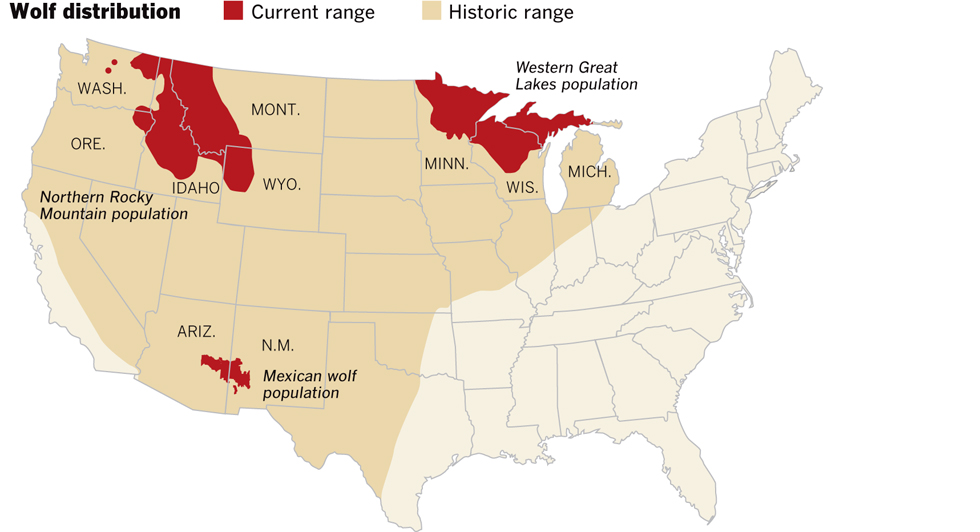
     The female wolf had to travel 450 miles from either Idaho, Montana, or Wyoming to reach the Grand Canyon. Check out the map below to see how far south she had to travel to reach northern Arizona (the occupied wolf range in southern Arizona is a small population of Mexican gray wolves; the Grand Canyon wolf was a gray wolf):
   

     This female wolf traveled an amazing distance to find a mate and start a family, just like Oregon's famous wandering wolf OR-7, affectionately named "Journey" by the public.

          Let's help give this astounding wandering wolf a name!

Thursday, August 21, 2014

Montana "Wolf Stamp"

**Public Comment Period Now CLOSED**
Montana is considering having a "Wolf Management Stamp." http://fwp.mt.gov/news/publicNotices/armRules/pn_0177.html
        This stamp would "be issued to any persons who wish to donate to the department's management of wolves." Any resident or nonresident would be able to purchase one or more stamps for a donation of $20.00 each.
         Most of the Department of Fish, Wildlife, and Parks budget comes from the sale of hunting, trapping, and fishing licenses and tags. This perhaps gives 'consumptive' (hunters, fishermen, trappers) a more skewed influence on the Department and what it can do with those funds, especially when it comes to wolf management. The proposed Wolf Management Stamp provide an additional funding source for wolf conservation and management in Montana. The stamp would give non-consumptive users (wildlife and bird watchers, etc.) the opportunity to contribute to wolf and wildlife management.
        Montana wants to know if you think this stamp is a good idea or if you think there should be any changes. It's important for both residents and nonresidents of Montana to comment, as both will be able to use the stamp.

Please submit your comment here: http://fwp.mt.gov/news/publicNotices/armRules/pn_0177.html
Comments are due Friday, August 22, 2014!

Here's a sample comment for a nonresident:

I live in _________ and visit Montana several times a year/plan to visit Montana in the future; one of the main reasons I go to Montana/plan to visit Montana is to enjoy Montana's rich array of wildlife, especially wolves, in a non-consumptive manner. I believe that the proposed Wolf Conservation Stamp is a good idea, and I know I would buy them to support Montana Fish, Wildlife and Parks and their efforts to coexist with wolves using methods other than lethal management. 
I would suggest a few changes; in the proposed rule, change the stamp from "wolf management stamp " to "wolf conservation stamp". Make sure that "non-lethal" is specified. These stamps should go exclusively to non-lethal wolf management, as FWP already gets its lethal management funds from consumptive users. Especially, I would like to see money go toward non-lethal proactive measures to prevent wolf/livestock conflict. I approve of the proposal's inclusion of money going towards the purchase and maintenance of wolf habitat; conducting research, education, and outreach; and hiring additional wardens to prevent poaching of wolves and other wildlife.
Thank you for this proposal that gives everyone a say in the management and conservation Montana's amazing wildlife that draws so many people from around the country.


Tuesday, June 24, 2014

Wood River Wolf Project - Idaho Workshop

       This past week I attended the Wood River Wolf Project's workshop in Idaho. The Wood River Wolf Project is an operation that has helped ranchers in the Sun Valley area of Idaho for almost 7 years. They work to help local ranchers protect their livestock from wolves.
                                     
      How does this help wolves? When wolves kill livestock like cows or sheep, the rancher can call Wildlife Services, a division of the Department of Agriculture who is charged with "resolving wildlife conflicts," to have the wolves killed. But the Wood River Wolf Project helps ranchers to prevent their livestock from being killed in the first place. The Wood River Wolf Project has worked with about 100,000 sheep over the last 7 years with less than 30 sheep lost to wolves over the entire period. Not a single wolf has been killed for depredation (preying on livestock) in the area. 
                                                    .         

          The WWWP uses creative tools like range riders, flagging fences, guard dogs, and night lights. At the workshop, we learned a lot about how to deploy these tools in the field so they work properly. We visited one of several ranches (Lava Lake Lamb) that has had great success keeping wolves and livestock apart. We met some sheep and guard dogs. The dogs serve to provide an extra presence with the sheep and to alert people when wolves are near.


       We also heard from a cattle rancher just outside of Yellowstone National Park . The main message we got from these ranchers was that is was more effective for them to prevent livestock loss in the first place than to wait until livestock has already been lost to wolves. Teaching the resident wolf packs to avoid livestock is better than killing wolves after-the-fact. In other words, proactive prevention works better for ranchers than reactive killing. 

        Non-lethal, predator-friendly ranching is better for ranchers and better for wildlife.

       The Wood River Wolf Project is saving wolves by increasing tolerance and protecting livestock. They have proven that wolves and livestock can coexist on the same landscape, and the project is a model for coexisting with wolves - and other predators - across the country and world. 
      

Friday, May 23, 2014

"Man-Eating Super Wolves"

Don't believe everything you see on TV.
 - especially when it's called "Man-Eating Super Wolves" (looking at you, Animal Planet). Facts can be, and have been, completely distorted for cheap entertainment. Most people see these horror shows and think that wolves really are man-eating beasts. It's really sad that such a popular channel is spreading lies and primal fear of wolves. Wolves need our protection, but who would want to protect something they fear? Wolves directly pay the price for this "entertainment."
        We're pretty upset about what Animal Planet showed about wolves for "Monster Week." They claimed that wolves are running out of prey and are starting to hunt and eat humans regularly (a flat-out lie). Here are the facts. In North America, 2 people have been killed by wolves in last 100 years. The loss of human life was tragic, but it is not a repeating pattern on the wolves' part. The wolf in Minnesota who bit the young camper had been fed by people at that campsite (it had been habituated to human presence). I have spent a lot of time close to wild wolves in many situations: when pups are near, when food is near, when they're  hungry, and never once have I felt remotely threatened. Wolves avoid humans. They DO NOT see us as food. All wild animals deserve our respect but wolves don't deserve our fear. In contrast, black bears have killed 63 people in the last 100 years, dogs kill 30 people EACH year, and cows kill 20 people EACH year (that's 1000 TIMES more people than wolves). Don't let @AnimalPlanet fool you. Wolves are not monsters. 
        Now, many people believe that wolves kill humans and you need to be afraid if wolves are near. How should people know any better with these wild distortions being broadcast on TV as fact? This is a huge setback for dispelling the myths surrounding wolves and gaining public acceptance for wolf recovery and presence on the landscape. 
        Animal Planet is selling flat-out lies about wolves and other wildlife just to gain viewership.

        Please contact them and share your outrage and concerns, and ask them never to air "Man Eating Super Wolves" again: 
http://corporate.discovery.com/contact/viewer-relations/
Or call their Ethics Hotline and leave a comment: 571-262-4899
Share your thoughts, but avoid using swear words and use good grammar. They'll take you seriously that way.

Monday, April 21, 2014

Wolf Watching in Yellowstone, April 2014

For spring break, I again headed to Yellowstone National Park in Wyoming to observe wolves in the wild. We saw a total of 11 wolves in three packs: 7 in the Junction Butte Pack, 2 in 755M's group, and 2 in the Lamar Canyon Pack. We were there for about 6 days, and every single day we saw hunting behavior from the wolves. Several times we saw young members of the Junction Butte Pack attempting to hunt some elk. One day, they faced off some elk on the edge of a rocky ledge, then chased one elk down some very treacherous and steep terrain. Then we saw the Lamar Canyon pair chase and test a small group of elk. Several more times we saw the Junction Butte wolves seriously chase some elk; but of all the wolves' kill attempts we witnessed on our trip, we didn't see a single successful hunt. Studies have shown that wolves are only successful about once or twice for every 10 times they attempt a kill. That means they fail 80%-90% of the time. Elk are by no means defenseless against wolves, and many times we saw the elk chasing the wolves. Wolves can be severely injured by their prey. Hunting is a life-or-death event for both predator and prey.
Here are some images from the trip:

These are the two members of the Lamar Canyon Pack, 925M and 926F. 926F is very pregnant, so 925M will have to provide for her and the pups all by himself. Perhaps at this moment he was showing her what he was capable of...but the elk would have none of that!

 889F and 755M. 889F used to be part of the Junction Butte Pack and 755M used to be the alpha male of the Lamar Canyon Pack before 06, his former mate, was shot. While we were there, this pair met up with two young males from the Junction Butte pack. At first, the two males chased 755M because they didn't know him, but eventually they all played together. Interesting inter-pack interaction.
 925M, aka "Big Gray," the current alpha male of the Lamar Canyon Pack.
 926F is the fearless alpha female of the Lamar Canyon Pack. She stopped to face this bull bison, who barely gave her a second glance. He's about 20 times bigger than her and so had nothing to worry about.
 Six of the seven members of the Junction Butte Pack.
 Coyotes on a bull elk carcass (not killed by wolves, but instead probably died of malnutrition)
 A yearling from the Junction Butte Pack spent quite a long time trying to get at this newborn bison calf, but the mother bison was experienced and the young wolf eventually gave up.
Young Junction Butte wolves frolicking while the alpha female was at the den, perhaps giving birth, and the alpha male attends to her.

Monday, March 17, 2014

Wolves and Livestock: Can They Coexist?

Know what's AWESOME? In the whole state of Washington in all of 2013, only one cow was killed by wolves. The Washington Department of Fish and Wildlife has been helping ranchers with awesome, creative ways to keep their livestock safe without having to kill a single wolf in any of Washington's thirteen wolf packs. Non-lethal methods are often very effective, and wolves and livestock CAN coexist. It does take a lot of effort and it's only fair that livestock owners get some help with nonlethal methods, whether from state or federal wildlife agencies or private organizations. Both are at work in Washington and with great results. Wolves usually view cattle and sheep as sort of alien, not as prey. Often, something happens that causes a wolf to associate livestock with food, such as the carcass of a cow or sheep that died of natural causes being left out in the open. The smell of rotting meat will attract wolves and they will scavenge on the carcass, which may cause them to associate living livestock with food. Only 20% of wolves cause problems with livestock, but those problems are highly publicized. The best way to keep livestock safe is to stop wolves from associating livestock with food in the first place, and there are lots of ways to go about this. Even if wolves do start preying on livestock, it's not too late to get them to stop. Here are some very neat and creative nonlethal deterrents and a handbook on how ranchers can use them: http://www.defenders.org/sites/default/files/publications/livestock_and_wolves.pdf

"Fladry" is a little on the wackier of the non-lethal methods, but it has proven very effective. Fladry is simply red flags along a string. For some reason, something about the fladry trips wolves up and they will not cross the line it makes. Wolves are very intelligent, so in case they do test the boundaries, there's also something called turbofladry, which is fladry with an electric current. So if the wolf tries to touch or step over or under the fladry, it will be met with an unpleasant experience and probably won't try again. Nobody really knows what it is about fladry that deters wolves, but it does. Don't believe it? See for yourself.
This calf in Washington state died of natural causes and this wolf scavenged on it before fladry was erected around the calf (the carcass couldn't be moved). The wolf visited for three days and nights but never once crossed the fladry (though he walked through the barbed wire fence with ease). Eventually he left the area and dispersed to Canada.

Some will argue that killing wolves is the better option to protect livestock, but this is not the case. Killing wolves after wolves kill livestock creates an endless cycle. Killing a wolf or wolf pack after it kills livestock only creates room for more wolves to move in and potentially kill livestock again, so then those wolves will be killed and more wolves will move in...and so on and so forth. Livestock will keep getting killed and the problem won't be solved. But if you teach the resident wolf pack not to harm livestock, then you won't lose livestock in the first place. 
Wolves and livestock can coexist.

If you've ever eaten a steak or worn wool, you're impacting wolves and other predators/wildlife. It doesn't have to be a negative impact, though; please check out http://www.predatorfriendly.org/ to support businesses practicing predator-friendly methods!

Sunday, February 9, 2014

Scientists Reject Plan to Delist Wolves

**THE OFFICIAL PUBLIC COMMENT PERIOD IS NOW CLOSED**

*Delisting of the gray wolf is still being considered; if you want to make your voice heard in an unofficial way, hand-write a letter and mail it to: 
                                               Department of the Interior
1849 C Street, N.W.
Washington DC 20240


In June, the Obama administration officially proposed removing gray wolves from the federal Endangered Species List EVERYWHERE IN THE UNITED STATES. That means that they wouldn't be federally protected.

The government claimed that this proposal was in line with "the best available science" on the issue. A panel of highly qualified scientists was commissioned to review the proposal. Well, they have, and they have REJECTED the proposal, saying it goes AGAINST the best available science. Please read about their conclusions here: http://www.fws.gov/home/wolfrecovery/pdf/Final_Review_of_Proposed_rule_regarding_wolves2014.pdf
As a result of this, the public comment period on the delisting is REOPENING for 45 days, starting February 10th and ending March 27th. **NOW CLOSED**
Here's where to submit your comment: http://www.regulations.gov/#!submitComment;D=FWS-HQ-ES-2013-0073-43030
Also, please copy your letter and email it to: feedback@ios.doi.gov 
Every comment counts! Here's what you might want your letter to include. Feel free to use the exact words, but read through first (I encourage you to try to use your own reasons in addition)! Remember to be RESPECTFUL, use proper grammar and spelling, and try not to base your whole argument on emotion - use scientific references! Talk about personal experiences with wolves and why they are important to YOU and young people across the nation. Remember that there is a 5000 CHARACTER LIMIT! (If you have any questions or want to run your letter by me, comment on this post or email at kids4wolves@gmail.com!) Thank you! 
Please comment "done" on this post when you've sent the letter so we can get an idea of how many people are writing! If you're willing, paste your whole letter - we'd love to hear what you're saying!

Here's what you could include in your comments:

 I oppose the proposal to remove gray wolves from the federal Endangered Species List.
     Wolves are still extinct in most of the states across the nation, yet if this proposal were to go through, wolves would be considered NOT endangered in those states. In the states of Washington and Oregon, only about 50-100 wolves exist, yet these would also be considered a not-endangered - "recovered" - population. Under the Endangered Species Act, species cannot be taken off the endangered species list unless they are recovered - which gray wolves are not! If wolves are removed from the endangered species list, then each state will manage their own wolves. States have a proven history of killing as many wolves as possible, often using inhumane and unscientific methods.There are still many habitats in the U.S. where wolves have the potential to thrive, but have yet to move into those areas; removing protection in places where wolves have yet to recover - specifically the Pacific Northwest, California, the Northeast, and the southern Rocky Mountains - is not scientifically justified. Wolves have sustainable populations in Wyoming, Idaho, Montana, Wisconsin, Michigan, and Minnesota; federal protection has already been removed in those areas. The only thing that will be accomplished under this proposal is removing federal protection in states that don't yet have a recovered wolf population. The decision to remove a species from the Endangered Species List is supposed to be based on the best available science (as you claim this proposal is), but the panel of highly qualified scientists you commissioned  to review your proposal have rejected it as NOT reflecting the best available science on this issue. They state that, despite what you say in your proposal, the wolves in the Pacific Northwest may be in fact a Distinct Population Segment (DPS) in need of continued federal protection. Another one of the main reasons behind your proposal is your assertion that gray wolves, Canis Lupus, never occupied the eastern United States; instead, that a new and entirely seperate species, Canis Lycaon, occupied that region. The panel of geneticists and taxonomists reject that assertion as inconclusive and NOT a reason to strip protection for gray wolves across the whole United States. 
 The scientists whose work is referenced in your proposal also voiced their strong disagreements (and I quote): "“Based on a careful review of the rule, we do not believe that the rule reflects the conclusions of our work or the best available science concerning the recovery of wolves, or is in accordance with the fundamental purpose of the Endangered Species Act to conserve endangered species and the ecosystems upon which they depend.” Please base your decision on the actual best available science, not the best available politics.
     Many young people care deeply about this issue. I am a member of a group called Kids4Wolves. We work to educate ourselves, our peers, and adults about the truth of wolves - both the good and the not so good (but solvable). We also work to get other young people involved in the process, to keep the policy makers honest when they make these decisions. After all, my generation will have to be the ones to live with the benefits or consequences of whatever your generation decides today. Young people in the United States are perhaps the group to be most effected by your decision.  I implore you to reconsider your proposal to remove federal protection for gray wolves across the whole United States.
Thank you.

Sunday, January 19, 2014

"Frozen" - Disney's Portrayal of Wolves

     Disney recently made a new animated musical movie called "Frozen."

     This movie is wildly popular among all ages (#1 in the country, in fact); probably more than 75% of my friends and classmates have seen it and they all are crazy about it. They've all been trying to convince me to go see it. In passing, one of my friends mentioned that there are wolves in the movie. I looked it up on the internet and this is what I found:
http://www.youtube.com/watch?v=qF7AfwMzrpc
     The vicious wolves, of course, are trying to eat the heroes. My friends say it's no big deal, that people don't even remember the wolf scene; but I think it's solidly reinforcing the Little Red Riding Hood mentality that young (and old) people have of wolves. What do you think is the impression of wolves that people are left with after seeing this? If you didn't know, what would you think about wolves? 

     Wolves do not attack and eat people. The fear of wolves is drilled into our heads starting with fairy tales in our infancy. We don't think to question them, and the idea that wolves are killers is reinforced throughout our lives, from phrases like "thrown to the wolves" to short scenes in movies like Frozen to whole movies like The Grey. Only people who take the time to actually research wolves will know that they are any different than what the media shows them to be. Society will only want to protect something they love, and they won't love something they fear - and they fear wolves. How can anyone be blamed for not knowing that wolves don't kill people? That's all they've been told, and we see wolves demonized at every turn. Why are wolves always the villain? I suppose it's just part of our culture - a part we need to work to change.
Displaying photo.JPG
Photo of Jesse at Wolf Haven International.

Wednesday, January 15, 2014

Killer Wolves?

       This is something I hear, in some form, somewhat frequently (this exact comment was left on the National Wolfwatcher Coalition Facebook page): "I suggest killing every wolf outside of a zoo or very remote areas. If you are offended, please have a loved one take a walk in the woods of Idaho unarmed." 
I have, in fact, "walked in the woods of Idaho (as well as Wyoming, Montana, and Washington wolf country) unarmed," and I have yet to be threatened, much less attacked, by wild wolves. I have spent time with no protection but a backpack or a tent, tracking, hearing and seeing wolves, and have never once felt in danger. But don't take my word for it: Americans take between 16 and 35 million trips to wilderness each year; only 2 people have been killed by healthy wolves in North America in the last 100 years (neither of which were in the lower 48 states). By comparison, cattle kill more than 20 people every year; that's about 1000 times more than wolves. Wolves generally avoid humans.

       All wild animals are dangerous, but wolves aren't any more dangerous than other wildlife. 

Photo of wolf tracks in Washington State. 


Wednesday, January 1, 2014

Wolf Watching - Yellowstone National Park December 2013

In the last few days of 2013, I visited Yellowstone National Park in Wyoming, USA. We saw four packs of wolves: the Eightmile (18 wolves), Junction Butte (9 wolves), and Lamar Canyon (2 wolves) packs, and 755M's group (2 wolves). Winter is a bountiful time for wolves. They are built for snow and cold weather. Their prey, elk, are weaker because it's hard to find vegetation under the snow. They also have a lot of trouble running through deep snow - something wolves are great at. Wolves are fat and happy these months. It is much harder during warm months. We witnessed a kill site from the two Lamar Canyon wolves. They brought down a bull elk overnight, and you could observe the battle between the predators and the prey in the snow. Although they lose more than 80% of the time, the predators won this battle, and the carcass fed the wolves as well as magpies, ravens, golden eagles, and bald eagles when we were there; it will surely feed more species like coyotes and foxes (and grizzly and black bears if they weren't hibernating). As it decomposes, it will add nutrients to the soil that will feed plant species. It was amazing to witness the cycle of life firsthand.


Junction Butte Pack.


Howling member of the Junction Butte Pack


Big Gray and Black Female, alphas of the Lamar Canyon Pack.